About CrustFungi.Com
My name is Alden Dirks, and I am the creator of CrustFungi.Com. I am a professional mycologist with expertise in fungal genomics and systematics. While fascinated by all members of "kindom" Fungi, I am particularly fond of fungi in the Pezizales, jelly fungi such as Phaeotremella spp., and — of course — crusts.
The beginning of CrustFungi.Com
In 2017, while living in Madison, Wisconsin, I began learning from corticiologist Karen Nakasone, who taught me much of what I know about crusts. Recognizing that there was very little information about the subject online, I decided to create CrustFungi.Com to provide the public with a high-quality educational platform on these understudied organisms. Launched in 2018, CrustFungi.Com was originally a simple website built with HTML and CSS. I added a few species profiles over the years, but the site remained limited in scope (Figure 1).
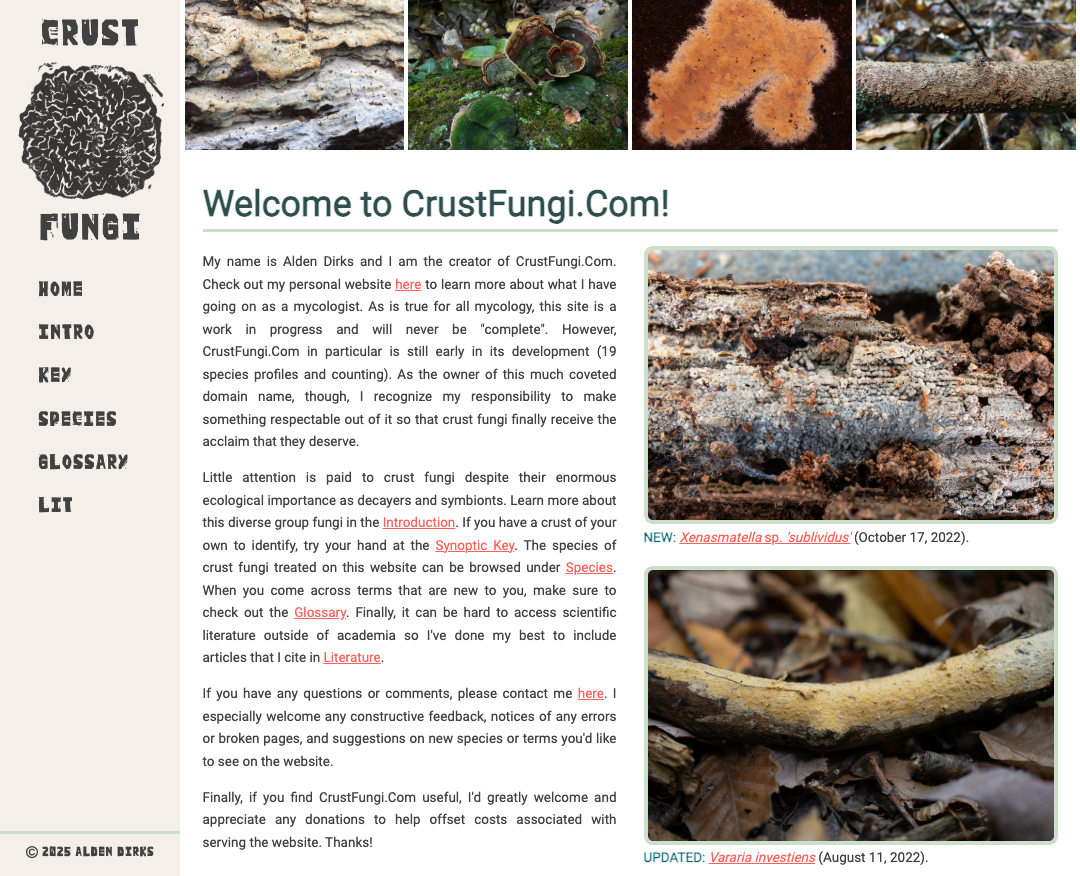
Figure 1. The original homepage of CrustFungi.Com.
CrustFungi.Com 2.0
During a period of unemployment in late 2025, I completely rebuilt CrustFungi.Com as a modern web app using the Django web framework. Any user can now add new profiles to the website. This endeavor was facilitated by the use of large language models. I believe "AI" will doom humanity, if not just for its worsening of the climate crisis, but I must admit these technologies made this effort feasible. I hope that CrustFungi.Com will grow faster and better capture the many different crust species of the world as a crowdsourced, community endeavor.
Aesthetics
The new website retains many of the aesthetics of the first version. The logo of CrustFungi.Com is a linoleum print that I made some time ago — it is meant to represent a crust species like Phlebia radiata or the like. The navigation links are written in Peich linocut typeface to match the logo design. Thanks, Robert Young, for this beautiful font!
The future of CrustFungi.Com
My future goals for CrustFungi.Com include creating a custom crust ITS database and BLAST portal, linking species profiles to specific observations (e.g., iNaturalist observations), and generating distribution maps.